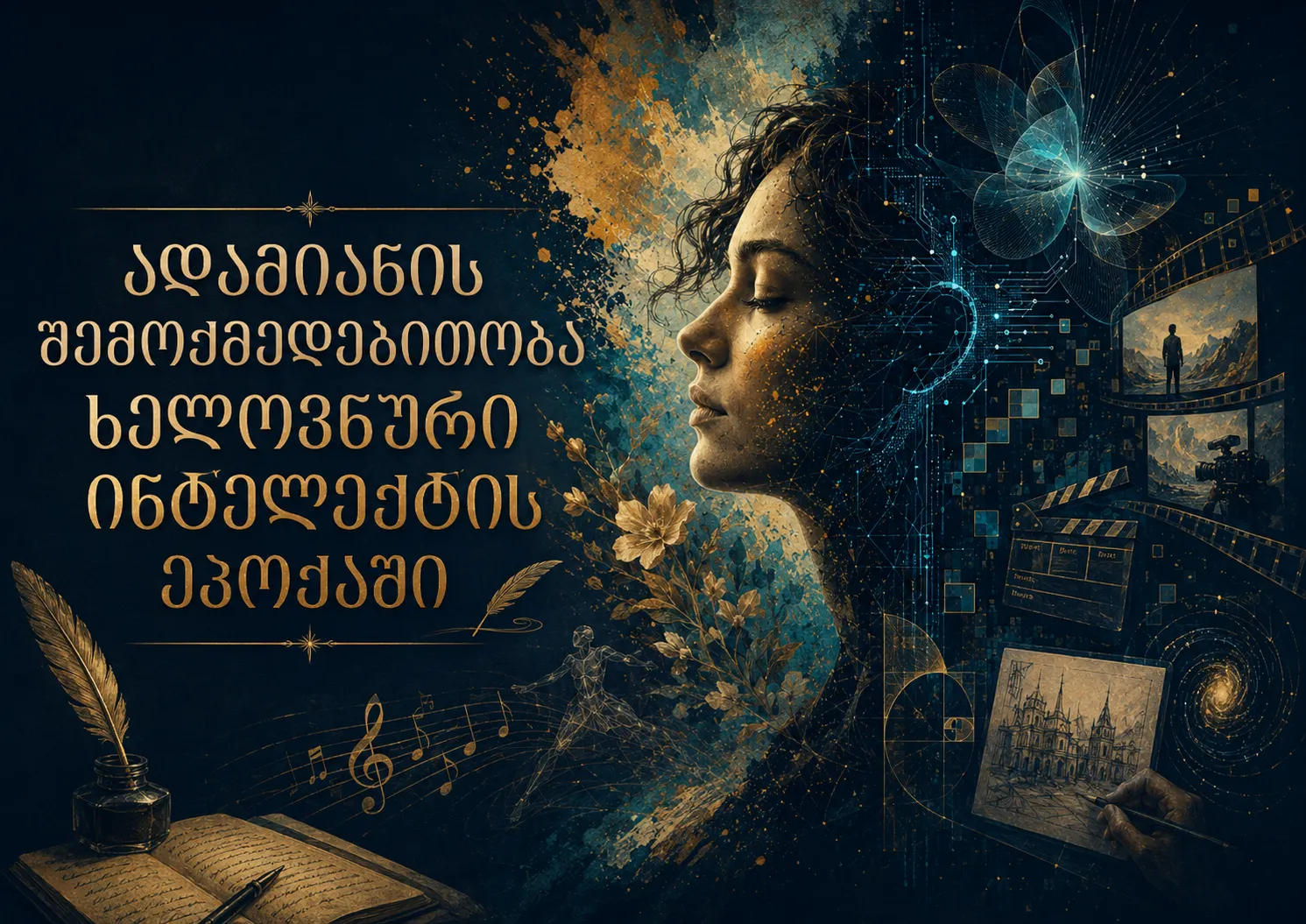
For centuries, creativity was regarded as a uniquely human ability. Music, writing, cinema and visual art seemed to express not only talent, but experience, memory and an inner world. Generative artificial intelligence has abruptly blurred that boundary.
Contemporary models are no longer merely tools that help us execute an idea we have already conceived. They can suggest form, rhythm, images, narrative and sometimes a combination that a person has not specified in advance. That is where the central question begins: if the result produces a new emotion, thought or aesthetic experience, to whom does the creative act belong?
Creativity as a process
We traditionally recognise an author through the finished work, yet art has always involved collaboration. A director works with a screenwriter, cinematographer and actors; a musician with producers and technicians; an architect with engineers and many other specialists. Technology has also been part of this process: the camera, synthesiser, editing software and digital effects did not abolish authorship.
AI continues this history, with one important difference: it offers alternatives and expands the space of possible decisions rather than simply carrying out an instruction. It can therefore seem like more than a tool, although recognising it as an independent author is premature. A model does not have personal experience, responsibility or intention in the same sense as a person.
Who owns the idea?
Several layers intersect in the output of a generative system: training material created by people; the technical work of model developers; the user’s instructions; selection and editing; and the final context. Within that chain, authorship is no longer concentrated at a single point.
Writing one short request is often insufficient to regard a person as a work’s full author. But when a creator develops a concept, makes material, repeatedly changes direction, selects results and integrates them into a personal artistic language, their authorial responsibility is clear. Value increasingly resides in selection, vision and editing.
A new measure of originality
Art was never created from an absolute void. Every author works under the influence of what they have seen, heard and read. The difference is that people filter those influences through their own experience, while a model processes statistical relationships.
Judging originality should therefore extend beyond whether AI was used. More useful questions are: does the work have a clear position? Does it create a new context? Are the author’s choices visible? Is someone responsible for the result? Concealing the technology damages trust; disclosing its use allows audiences to make their own assessment.
The human role does not disappear
AI can quickly produce technically accomplished material, but speed and polish do not automatically create cultural significance. Meaning emerges when a work connects with a particular time, society and experience. Making that connection remains a human responsibility.
A creator’s main advantage may no longer be the ability to make every element by hand. Taste, critical thinking, ethical boundaries and knowing what is worth saying become more important. In an age of easy generation, selection itself becomes a creative act.
What comes next
In the coming years, we may see more hybrid authorship: people define the purpose and meaning, while AI explores possible forms. This process will require new professional standards, including transparency about data sources, protection of creators’ rights, disclosure of AI involvement and a clear allocation of responsibility.
The principal danger is not that a machine will inevitably replace the creator. A more tangible risk is that culture becomes a stream of uniform, rapidly produced and endlessly repeatable material. A strong response is a clear authorial vision and demanding editorial standards.
Creativity may indeed cease to be an exclusively human technical ability. Responsibility for meaning, reflection on experience and the moral weight of choices still rest with people. It is in this space that the uniqueness of the future author will be defined.